After-hours digital care: Healthdirect, home doctors and the 2am script
At 2am the choices are a nurse line, a home visit, a marketplace GP app, or the emergency department. Here is how those Australian services differ, what they can prescribe, and how to decide without pretending it is your usual clinic.
Samira Haddad, Rural and community correspondentUpdated
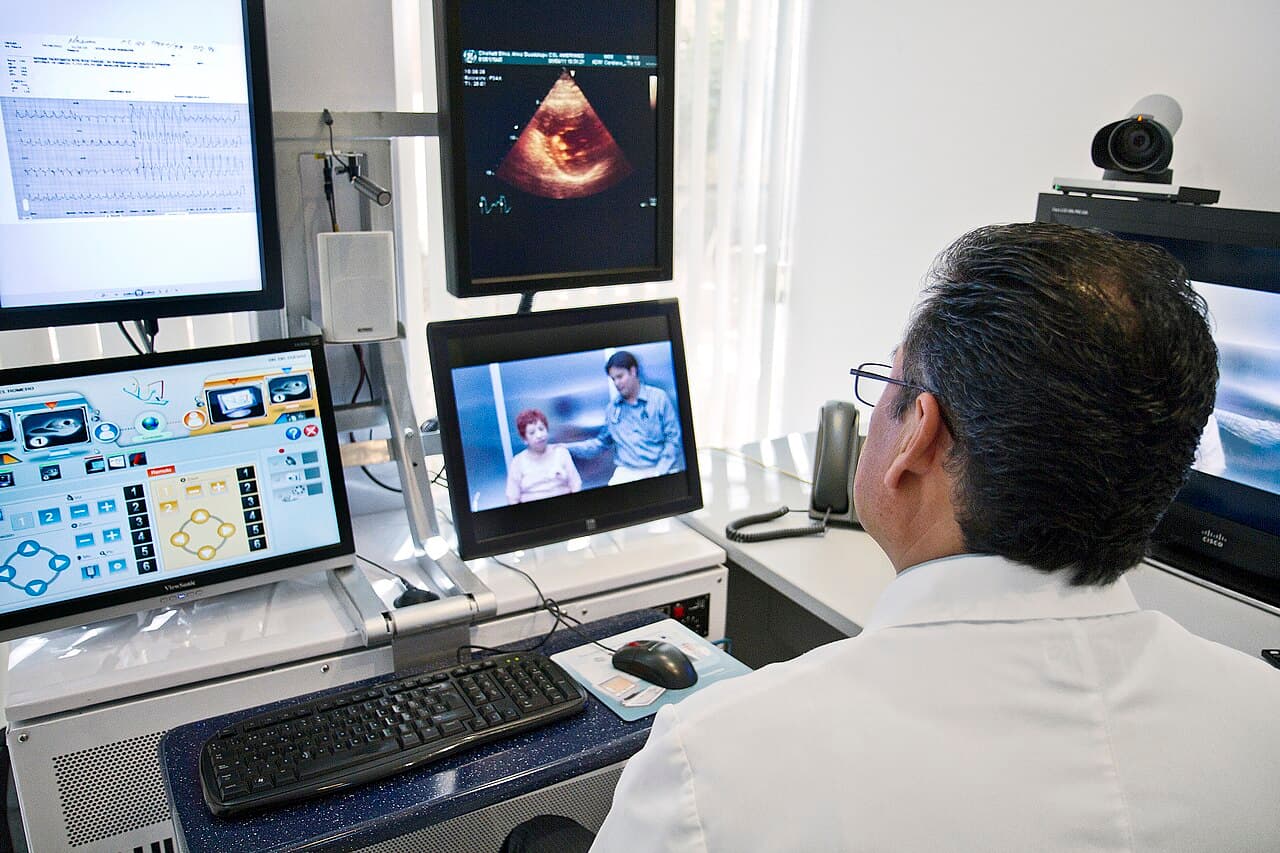
At two in the morning the Australian health system is a different machine. The usual GP is closed. The pharmacy may be closed. The person on the other end of a chat window has never met you. Something still has to happen: advice, a visit, a script, or a trip to a lit waiting room.
The after-hours market now offers several doors at once. Healthdirect will talk to a nurse. A home-visiting service will drive to some suburbs. Marketplace GP apps will sell a video consult and, sometimes, a prescription. Emergency departments will see you if you come, in an order that is about acuity, not arrival time.
This is a map of those doors. It is not a protocol for your symptoms, and it is not an endorsement of any company. If you want a longer look at how to pick a remote service in daylight, read choosing a telehealth provider. After midnight the same questions apply, with less patience and worse lighting.
What "after hours" means in practice
After-hours is a funding term as well as a clock. Medicare defines specific windows for higher rebates. Services market themselves around those windows. Patients experience something simpler: the clinic that knows them is shut, and the remaining options do not share a record.
That missing record is the real after-hours problem. A nurse on a national line can work from what you say. A visiting doctor can work from what they see. An app can work from a form. None of them automatically holds last week's bloods or the reason your usual GP avoided a particular antibiotic. You are the continuity, whether you wanted the job or not.
Rural and remote after-hours care is thinner again. Home-visiting locums cluster where the driving is short and the volume pays. A small town may have an on-call GP, a hospital nurse, or a retrieval service, and not much else. A marketplace app still works if the bandwidth works. It does not summon a doctor to a property an hour off the highway.
Healthdirect: nurse triage, not a consult
Healthdirect is the national, government-funded service most people are told to ring first when they are unsure. The phone line is staffed by nurses using structured triage. There is also a website with a symptom checker and a service finder. Some states have folded or aligned their older nurse-on-call brands toward this channel. The local number on your fridge may still be the one you should use; the logic is similar.
What the nurse line can and cannot do
What a nurse triage line is good at:
- Sorting "this can wait until morning" from "this needs ED now".
- Talking a not-quite-emergency through the next few hours.
- Pointing you at an after-hours clinic, a pharmacy with extended hours, or a home-visiting service if one exists.
- Giving you a record of the call that you can take somewhere else.
What it is not:
- A diagnosis you should treat as final.
- A prescription service.
- Your usual GP.
- A guarantee that the next service will agree.
Triage tools err in both directions. They send some people to ED who would have been fine at home. They also, like every remote assessment, miss things they cannot see. The sceptical use is to treat the outcome as a well-informed second opinion about urgency, then decide. If the nurse is worried, do not talk yourself out of it because you dislike hospitals. If the nurse says morning, and you deteriorate, you are allowed to call back or go in.
Healthdirect will not know that your child has a complex care plan unless you say so. Have the medicines list and the usual-hospital name in your hand before you dial.
Home doctors: a physical visit with digital booking
Home-visiting after-hours services — the kind you book by phone or app, sometimes still remembered as "the locum" — are a different product. A doctor comes to the house, or to a residential aged-care facility, in the areas they cover. Coverage is the first filter. If you live outside the driving radius, the website will be polite and useless.
When a visit is the right tool, it is because someone needs to be examined. Ears, abdomens, wounds, a person who cannot sit in a waiting room, an older person who should not be packed into a car at midnight. A camera will not do that work. Our piece on when telehealth is the wrong tool is mostly a daylight argument. At 2am it is also a transport argument.
What a visiting doctor will not magically know
Limits are ordinary and under-advertised.
- The doctor may not have your file. Bring a medicines list and any recent letters.
- They may not carry every drug. A visit can end with a script and a closed pharmacy.
- They may still send you to ED after looking at you. That is not a failed visit. That is the visit working.
- Billing varies. Some bill Medicare only. Some charge a gap. Ask before they leave the depot.
A home visit is not a community nursing service and it is not an ambulance. If the person cannot walk, is chest-clutching, or is confused in a new way, do not spend twenty minutes seeing whether the locum is "on the way".
Marketplace GP apps after midnight
Then there are the apps. Some are telehealth arms of existing medical groups. Some are marketplaces that roster whoever is on. Some are built around a narrow product: a repeat script, a UTI pathway, a medical certificate. They are easy to open when you are tired. That is the point.
Used narrowly, they have a place. A person who has run out of a stable contraceptive, or who needs a straightforward certificate, may get a faster, cheaper night than an ED wait. Used as a default GP, they produce orphan decisions: antibiotics without culture, steroids without a plan, a mental-health script with no follow-up.
Questions that still apply at 2am, even if you only have the energy for two of them:
- Is the clinician registered in Australia, and will you get their name?
- Do they know they cannot see your usual record?
- Will they send a letter to a practice you nominate?
- Is the fee a gap on top of Medicare, or a private invoice?
- Are they allowed to prescribe this medicine in your state without an in-person exam?
If the app's business is volume, the clinician is under the same clock you are. That does not make them careless. It does make a complex history a bad fit. People with chronic pain, benzodiazepine or opioid requests, or a new mental-health crisis will often be declined, and should not treat that decline as an insult. It is sometimes the only safety feature the product has.
Pharmacies sit next to this market. Pharmacist-led digital care has expanded what a community pharmacist can supply or restart in defined circumstances. That can be a better 2am answer than a video GP you will never see again — if the pharmacy is open, and if the medicine is in the allowed set. It is not a back door for everything.
Emergency departments are not a failure of digital health
ED is the service that cannot close. It is also the service that looks, from a sofa, like the place you will wait for six hours and annoy a triage nurse. Both things can be true. Neither is a reason to avoid the department when the risk is time.
Digital tools sometimes try to keep people out of ED. That is a reasonable system goal when the alternative is an after-hours clinic. It is an unreasonable goal when the person needs oxygen, imaging, a surgeon, or a safe observation ward. A marketplace app that advertises "skip the wait" is not assessing you in the same way a triage nurse is.
Bring, if you can, the medicines list, the health-care card, and the name of the usual GP. If Healthdirect or a telehealth doctor sent you in, say so. If you have a My Health Record with anything useful in it, mention it, and do not assume the registrar has it open.
For children, after-hours hesitation is common and costly. A parent who is "probably bothering people" is often the person who should have come sooner. Digital checkers can support that decision. They cannot watch the child overnight.
A way to decide without a flowchart tattoo
No article should pretend it can triage you. A few distinctions are still fair journalism.
Ring a nurse line if you are unsure whether this is urgent and you can have a conversation. Book a home visit if someone needs hands on the person and you are in the coverage zone. Use an app if the problem is narrow, the medicine is ordinary, and you can still tell your usual GP in the morning. Go to ED, or call an ambulance, if waiting for any of those options feels like a gamble with breathing, bleeding, chest pain, stroke signs, or safety.
A few extra filters rural readers already know:
- If the local hospital is an hour away, leave earlier than a city person would.
- If the pharmacy is shut until nine, a script at 2am is only a piece of paper.
- If you are the only adult in the house, "watch and wait" means you are the watcher. Say that to whoever you call.
After-hours care is real care. It is rarely continuous care. Treat every 2am decision as something your usual clinician should hear about on the next working day.
That last habit is the one the apps will not do for you. Forward the letter. Take the leftover blister pack in. Say what was prescribed. The point of a messy night is not to found a new relationship with a chat window.
What practices can set up before the night goes wrong
Daytime systems decide how bad 2am is. A practice that publishes an after-hours number, a Healthdirect reminder, and a rule about repeat scripts is doing more than a practice that only says "call the hospital". A practice that keeps an Active Script List tidy, and tells patients which medicines it will never restart remotely, prevents some of the marketplace traffic it later complains about.
Residential aged-care homes need this in writing: who is on call, when to use a locum, when to call an ambulance, and how the usual GP finds out. A video GP at 1am can be appropriate. A pattern of after-hours antibiotics with no daytime review is not a model of care.
None of this requires a new platform. It requires a sentence on the website that is still true at midnight, and a receptionist who is allowed to say "we will look at that in the morning" without pretending the night did not happen.
After-hours digital care is now part of ordinary Australian life. Use the nurse line for uncertainty, the home visit for examination, the app for narrow tasks, and the emergency department for danger. Then go back, if you can, to the clinician who already has the file. The 2am script is sometimes necessary. It should not become the record.
Frequently asked questions
Is Healthdirect a doctor?
- No. Healthdirect is a national service that includes nurse triage on the phone, a symptom checker, and a directory. Nurses can advise you on urgency and where to go. They do not replace a GP consult, and they do not usually issue a prescription. If the nurse says ED, that is a triage outcome, not a booking at your usual practice.
Can an after-hours app write a regular medicine at 2am?
- Sometimes, depending on the clinician, the medicine, state rules and whether they can see enough history. Many services will not start or continue certain drugs without records. A convenient script is not the same as a medicines review. If the app cannot send a letter to your usual GP, treat that as a warning.
When should I skip the apps and go to an emergency department?
- When the problem may be time-critical — chest pain, stroke signs, severe shortness of breath, heavy bleeding, anaphylaxis, a limp or unusually drowsy child, or a person who is not safe. Digital triage can help you decide. It should not delay an ambulance. If you are unsure and very unwell, ED is the system designed for that uncertainty.
Corrections and complaints: read our editorial standards or write to the editors.