Video versus phone: when a telehealth consult is clinically appropriate
Phone is faster and more familiar. Video shows a face, a room and sometimes a rash. This guide sets out the clinical limits of audio-only care, when a camera helps, and why bandwidth and privacy still decide the modality in Australian homes.
James Okonkwo, Health systems reporterUpdated
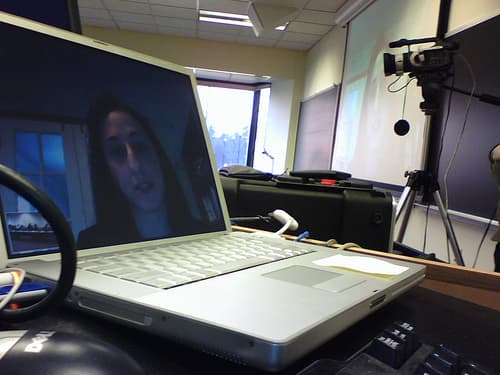
Australian general practice did not fall in love with video. It fell in love with the phone, then was told, after the emergency, that a camera was the grown-up option.
That preference is defensible in a policy note. It is less tidy in a kitchen in Dubbo at 4.15 pm, with a teenager using the good Wi-Fi, a parent holding a phone that last updated its operating system during the Morrison government, and a GP who has six minutes before the next booked soul.
This article is journalism about the Australian health system, not personal medical advice.
The clinical question is not "which modality is modern?". It is "what does this consult need the clinician to perceive?". Sometimes the answer is a voice and a medicines list. Sometimes it is a face, a gait, a living room, or a rash that will not confess on speakerphone. Sometimes it is none of those, because the person needs a room and a pair of hands. For that last category, go to when telehealth is the wrong tool and do not negotiate with a booking screen.
What a phone consult can actually do
History without a view
Audio-only care is not a lesser copy of medicine. It is a different sensory diet.
A GP on the phone can take a history, which is still most of general practice. They can hear breathlessness, pause, flatness, agitation, or the partner supplying all the answers. They can titrate a known medicine, explain a result, decide that a certificate is reasonable, or recognise that the story of chest tightness is a reason to stop the call and send the patient to urgent care.
What they cannot do is look. That sounds obvious until you watch how often we pretend otherwise. Pallor, jaundice, a facial droop, a child's work of breathing, a neglected room, a tremor, a poorly healing wound, the way someone stands up from a chair: all of that is visual. A practised clinician will ask proxy questions. Proxy questions are not an examination.
Phone also hides the clinician. Patients cannot see whether the doctor is looking at the record, at another screen, or at a lunch. That is not an ethical crisis on every call. It is a reason not to romanticise audio as intimate care.
The MBS settlement after 2022 treated phone as acceptable for a lot of short, familiar GP work and treated video as the richer default. That is a funding preference with a clinical hunch behind it. It is not a finding that every phone consult is unsafe. Plenty of older patients, and plenty of GPs, still do their best work on a handset they already know how to answer.
When the camera earns its keep
When seeing changes the plan
Video is useful when seeing changes the decision.
A rash is the cliché, and still true if the light is daylight and the camera is steady. A mental health review is often better when you can see whether the person has washed, whether they make eye contact, whether the smile is a performance. A respiratory complaint in a child is easier to triage if you can watch the chest. A fall in an older person is a different conversation if you can see the bruises they have already explained away.
Video also shows context that patients do not think to report. The blister pack on the table. The oxygen concentrator in the corner. The other adult who is clearly running the consult. The fact that the "home blood pressure machine" is a supermarket wrist cuff on the wrong arm.
There is a quieter use that specialists already understand. A planned video review of a stable patient saves a day's travel and still lets the clinician notice that the person has lost weight. Rural families have been making that bargain for years, long before city clinics discovered waiting-room yoga. The constraints of that bargain belong with telehealth in rural and remote Australia.
Video does not automatically make a consult appropriate. A high-resolution image of an abdomen will not localise peritonism. A smiling teenager on camera can still be unsafe in the house. The camera is an extra sense, not a clinic.
Privacy in a house that is not a consulting room
Clinicians train for rooms with a door, a curtain, and a habit of asking who else is present. Australian houses are not built to that spec.
A phone consult on speaker in a share house is a confidentiality incident waiting for a housemate. A video consult that pans across a bedroom can expose more than a rash. Family violence is the serious version of this problem. A person may not be free to say what is happening. A partner may insist on sitting in. A parent may answer for an adolescent.
Good practice is slightly awkward and very simple.
- Ask who is in the room, and believe a clipped answer.
- Offer a yes/no safety question that does not require a speech.
- Do not demand video if audio is the only private channel the patient has today.
- Do not record the call into a consumer app because the software makes it easy.
- Use the practice's own platform or a known clinical video product, not a random personal Facebook link.
Patients can do their half. Sit in a car if the house is unsafe or crowded, which is already an Australian clinical landscape. Use earphones. Tell the doctor if a child is listening. Close the door on the smart speaker that is always listening for a weather update.
Healthdirect and similar services have spent years writing scripts for this. Ordinary GP software has not always caught up. The gap shows up as a cheerful "can you just turn your camera on?" when the clinically right move is to leave it off.
Bandwidth in the bush, and in the brick veneer
The digital divide is not a metaphor when the consult drops on the word "chest".
Regional and remote Australia still includes households on mobile coverage that is marketed as 4G and behaves like a rumour. Even in capital-city fringes, a video platform that wants a modern browser will lose to a phone call on the same device. Older Australians are not uniquely incapable. They are uniquely likely to be handed a link that assumes an Apple ID, a password manager, and a grandchild.
Digital health literacy in older Australians is the longer version of that problem. The short version for modality is this: if joining the video is the appointment, you have already spent the clinical time.
A sensible clinic plans for failure.
- Send the link early, in SMS and email, with a human phone number.
- Have a rule that three minutes of frozen forehead becomes a phone consult, not a lecture about browsers.
- Accept photos through the incoming channel the practice already uses for results, not through the doctor's personal device.
- Do not punish the patient for the NBN node.
Vendors will say their codec is fine on a weak connection. Sometimes it is. The sceptical question is what happens when it is not, and whether the clinician still gets paid for a failed experiment. Patients should not have to care about that last part. Practice managers do.
Why some GPs still default to the phone
Because it works, because it is kind, and because the alternative is often theatre.
Starting a phone call takes seconds. Starting a video call takes identity checks, a link, a permissions prompt, a "you are muted", and a moment of mutual embarrassment when someone is in a car park. Multiply that by thirty attendances and you understand the default.
Phone is also how a lot of Australian general practice already happened before 2020, only then it was an unbilled "quick call" that held the system together and burnt the GP. Putting some of that work on a claimable item was overdue. Keeping it on the phone is, for a repeat of a stable antihypertensive in a patient the doctor has known for a decade, not a scandal.
There is a less flattering reason too. Video exposes the doctor. It requires a room that looks like a room. It is harder to run two things at once. A profession that spent the 2010s drowning in inbox tasks will not always choose the modality that demands more presence.
"If I can do it safely on the phone I will, because the video link is where the afternoon goes to die," a Tasmanian GP told us, which is not a guideline, and is more honest than most vendor webinars.
Patients can still ask for video. They should, when they have something to show, when they are worried the doctor is not hearing the seriousness, or when they are tired of being a disembodied problem. They should also accept a no when the GP says the camera will not change the plan and an examination will.
A practical way to choose, five minutes before the slot
Think about the task, not the brand of software.
Choose phone when the problem is known, the patient is known, nothing needs to be seen, and privacy is easier without a camera. Scripts, results, a straightforward mental health check-in with a person who hates being on screen, a rural review where the video will not hold: these are audio jobs if the clinician agrees.
Choose video when appearance, movement, environment, or a visible lesion might change the next step. Choose it for many first specialist reviews that have been judged safe to do remotely, and for family meetings where seeing the room is part of the assessment.
Choose neither when the story includes red flags, a child who looks unwell, a new neurological deficit, abdominal pain that might be surgical, or any examination that requires touch, instruments, or dignity that a bedroom cannot provide.
Bring a list either way. Medicines. Allergies. What you want from the ten minutes. A photo taken near a window, not under a yellow bathroom bulb. A blood pressure if you have a machine you actually know how to use. The name of your usual pharmacy. Your myGov-ready details if an electronic prescription token will be sent.
If the practice offers only phone and you needed video, say so at booking, not at minute eight. If it offers only video and your connection is a prayer, say that too. Modality is a clinical choice. It is also a household infrastructure choice, which Australian policy still talks about as if it were a matter of attitude.
The useful scepticism is reserved for anyone who tells you that video is always better, or that phone is always enough. A consult is clinically appropriate when the clinician can perceive what the decision requires, the patient can speak freely, and both of you know when to stop and go indoors. Everything else is a setting in an app.
Frequently asked questions
Is a phone consult always inferior to video?
- No. For a known patient and a bounded problem, a phone call can be the right tool. Inferior is the word for using audio-only when the diagnosis depends on looking, measuring, or watching someone move.
My GP always rings rather than sending a video link. Should I push back?
- You can ask for video if you think the problem needs to be seen. A default to phone may be habit, software friction, or a judgement that this particular review does not need a camera. Ask what they need to see.
What if my internet cannot hold a stable video call?
- Say so early. A failed video consult that collapses into a shouted phone call wastes the slot. Many rural and older patients are better served by a planned phone consult plus photos sent through the practice's proper channel.
Corrections and complaints: read our editorial standards or write to the editors.