Digital diabetes care in Australia: CGM, pumps and the NDSS
Continuous glucose monitors, insulin pumps and the National Diabetes Services Scheme have made diabetes one of Australia’s most digital chronic conditions. This article separates a pretty glucose graph from a care plan, and explains NDSS access in general terms.
Priya Nair, Medicines and pharmacy editorUpdated
Diabetes was a digital condition before most of the rest of medicine admitted it. People have been writing numbers in little books for decades. The book became a meter memory. The meter became an app. The app became a circle of time-in-range, a stream of arrows, and, for a growing group of Australians, a sensor worn on the arm that talks to a phone and sometimes to a pump.
The National Diabetes Services Scheme — NDSS — is the unfashionable infrastructure under that colour. It is how eligible people obtain subsidised needles, syringes, testing strips, and, subject to the rules of the day, continuous glucose monitoring products. It is not a clinic. It is not an algorithm. It is a public scheme that decides, in paperwork and eligibility, who can afford the hardware that makes the pretty graph possible.
This article is a map of that landscape: CGM, pumps, clinic software, and the difference between a report that looks like a weather radar and a care plan that still works when the phone is in another room. It is journalism, not a personal regimen.
What continuous glucose monitoring is, and what it is not
A continuous glucose monitor measures glucose in interstitial fluid, the fluid between cells, usually via a small filament under the skin. It reports a number and often a trend arrow. Some systems alarm when glucose is heading too low or too high. Some can share a stream with a family member or a clinic. Some talk to an insulin pump and contribute to automated insulin delivery.
That is a different object from a finger-prick meter, which reads capillary blood at a moment in time. CGM is denser. It shows the night. It shows the commute. It shows what a bowl of pasta does when you thought it would do nothing. It is also delayed and imperfect when glucose is moving fast, which is why diabetes teams still talk about confirmatory finger-pricks in some situations — illness, a suspected failed sensor, symptoms that do not match the screen.
The clinical promise is not a lifestyle badge. It is fewer surprises, especially hypoglycaemia that used to arrive without warning, and a richer conversation about insulin timing, food, and exercise. The clinical risk is the same as every other dashboard: people chase the graph. They over-correct. They lose sleep to alarms. They treat a sensor error as a metabolic emergency, or a metabolic emergency as a sensor error.
If you are considering CGM, the useful questions are boring. Which system does your clinic already know how to read? What does the NDSS currently subsidise for someone in your situation? Who will teach you the alarms? What will you do at 2am when the phone and the sensor disagree? A brochure will not answer the last one.
Pumps, loops, and the person who still has to think
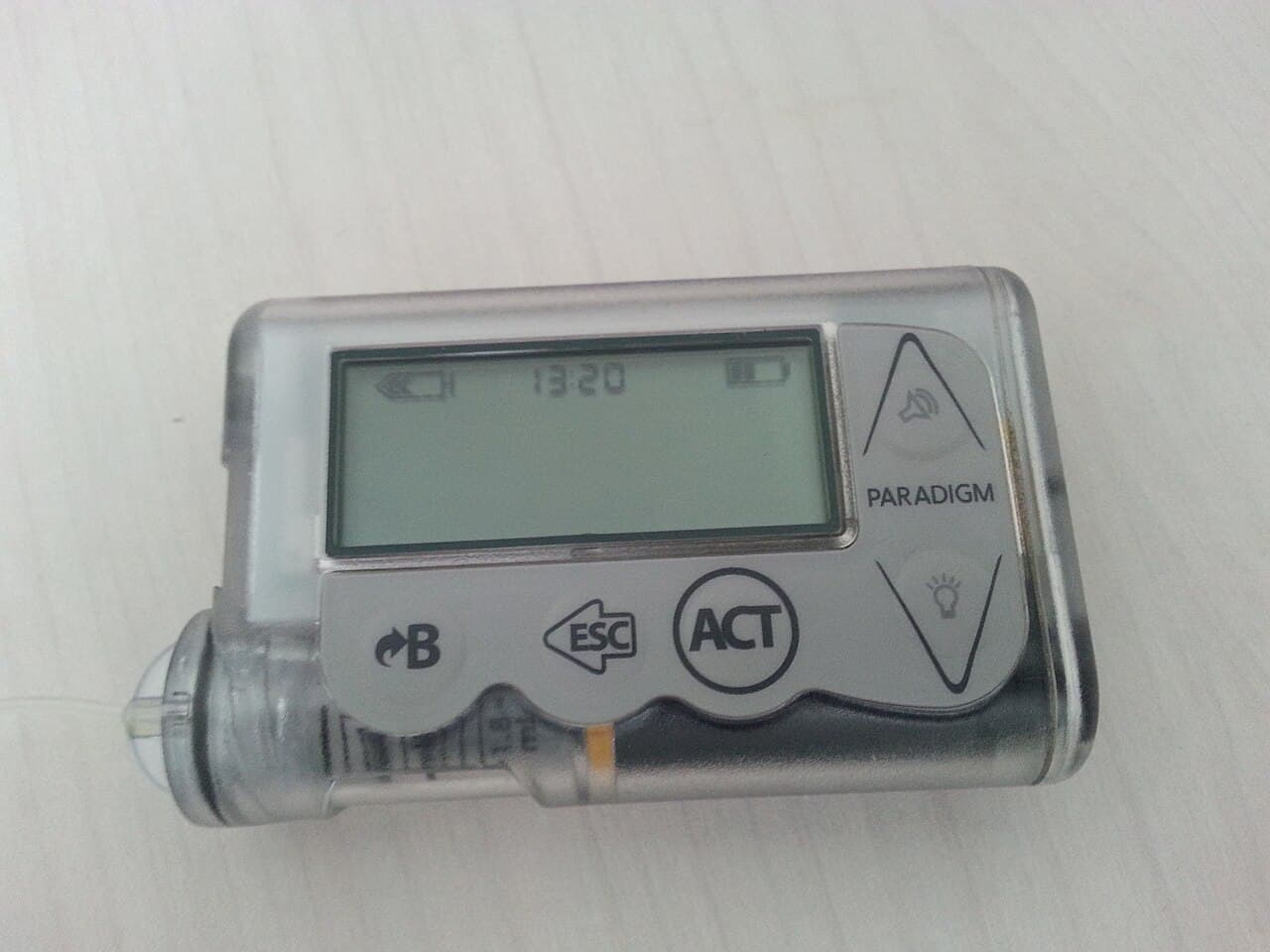
Insulin pumps deliver rapid-acting insulin through a cannula, either through tubing or as a patch device. They replace the idea of separate long-acting and mealtime injections with a basal rate and boluses, plus a lot of button-pressing. Hybrid closed-loop or automated insulin delivery systems add a CGM feed and an algorithm that adjusts basal insulin within limits.
These systems can be life-changing for the people they suit. They are not a pancreas. They do not remove carbohydrate counting for many users. They do not manage ketones. They do not give consent at the swimming carnival. They require a plan for site failure, for illness, and for the day the phone or the pump or the sensor drops off.
Australian access sits across several layers that should not be collapsed into one sentence. There is the device itself, which may be purchased, funded through private health insurance extras or hospital cover in some cases, or accessed through clinic programs. There is the consumable stream — reservoirs, cannulas, sensors — which may involve the NDSS, the PBS, or out-of-pocket cost depending on the product and the person’s eligibility. There is the education, which is clinical work, not unboxing.
If a pump is in the conversation, it should be a clinic conversation. A GP, an endocrinologist, and a credentialled diabetes educator do different parts of that work. A social media loop group does another part, sometimes helpfully, sometimes as an informal workshop in settings that were never designed for your kidneys.
Do not learn sick-day management from a stranger’s screenshot. Do not assume a hospital will know your particular algorithm on sight. Wear a medical alert if you use insulin. Keep a backup injection plan. Digital diabetes care includes the analogue failure mode.
The NDSS, in general terms
The NDSS is one of the more successful quiet programs in Australian health. You register with a diagnosis confirmed by an authorised health professional. You then access subsidised products through community pharmacy and NDSS channels, using an NDSS card the way other people use a rhythm of repeats.
What the scheme covers, and what it does not
What is subsidised has changed over time, especially for CGM. Eligibility has expanded in stages for different groups — including, in recent years, much broader access to CGM products for many people with type 1 diabetes, and more limited or condition-specific access for some people with type 2 diabetes and other forms. The precise current list is a thing you check on the NDSS site or with a diabetes educator, not a thing a journal should freeze in a paragraph and pretend is eternal.
A few stable points are enough for a reader:
- registration is the door; the card is not automatic at diagnosis unless someone completes the form
- products have quantities and intervals; “I ran out early” is a conversation, not a glitch
- a pharmacist can often supply NDSS items, but they cannot invent eligibility
- CGM access depends on meeting the scheme rules, not only on wanting a graph
- education products and programs sit beside the consumables, and are easy to skip
The NDSS does not replace the PBS. Insulin, many tablets, and some other medicines remain PBS items with the usual electronic prescription tokens or paper. Needles, strips and sensors are a different counter conversation. People new to the system often discover this only when they have a token for insulin and no card for the pen needles.
If you change pharmacies, take the NDSS card with you. If a child is ageing out of a paediatric clinic, ask what happens to product access and to the clinic software login. Administrative cliffs are a form of clinical risk.
Clinic software versus the app on the fridge
Every major CGM and pump vendor has a cloud. LibreView, Dexcom Clarity, pump manufacturer portals, clinic-facing dashboards: the names change and the idea does not. The person at home looks at a day. The clinician, if they have a login and a consent, looks at two weeks of time-in-range, glycaemic variability, and hypoglycaemia.
When this works, a fifteen-minute review is better than it was in the era of a crumpled meter printout. The educator can see that every Tuesday after sport the glucose falls. The endocrinologist can see that overnight basal is the problem, not breakfast. The GP can see that the person is not, despite a sheepish HbA1c, “non-compliant” — they are fighting a pattern that has a clock.
When it fails, everyone is looking at a different picture. The patient has an app the clinic cannot open. The clinic has a PDF from last winter. A carer has sharing turned on and the adult patient does not know. A wearable step count is being used as a proxy for a glucose conversation and nobody is looking at the actual sensor. We have written about what to do with wrist-worn numbers in general practice for that collision.
A practical settlement:
- use the system your clinic already reviews, if you have a choice
- share the clinic-facing report, not a social screenshot
- agree how often someone will look — not every ping, not never
- put the share arrangements in the care plan so a new registrar can find them
- remember that My Health Record will not automatically become a CGM archive
GPs are not all diabetes-technology clinics. Many will rightly say that pump adjustments belong with the specialist team, while they keep doing the rest of medicine: blood pressure, lipids, feet, kidneys, mental health, the infection that is not a sensor error. That division of labour is not a snub. It is how a generalist remains a generalist.
The pretty graph and the care plan are different genres
A CGM report is a retrospective painting. Time in range, time below range, a modal day, an ambulatorial glucose profile: these are useful nouns. They are not decisions.
A care plan is a set of decisions that still function when the painting is offline. It names the insulin or other medicines. It names the hypoglycaemia treatment that is actually in the house. It names sick-day rules, ketone checking if that applies, and when to go to hospital. It names complications screening — eyes, kidneys, feet — which no graph will book for you. It names who the person calls on a Sunday.
Australia already has bureaucratic versions of this: GP Management Plans, Team Care Arrangements, diabetes cycle-of-care items. They can be box-ticking. They can also be the only moment in a year when someone asks about mood, driving, and whether the alarms have made the household insomniac.
The graph should feed the plan. If time below range is creeping up, the plan changes. If a new steroid course from a respiratory clinic is about to land, the plan changes. If a person is pregnant or planning pregnancy, the plan changes in ways a consumer app should not be trusted to supervise alone.
A perfect time-in-range week is not the same as safe driving, healthy kidneys, or a household that can treat a hypo. The graph is a witness. It is not the will.
People who live with diabetes know this in their bones and still get seduced, because the graph is prettier than a pathology form. Clinicians get seduced too. It is easier to admire a dashboard than to ask about the school camp.
Hypoglycaemia, alarms, and the social life of a sensor
CGM alarms are a safety feature and a relationship test. Partners wake. Teenagers silence the phone. Older people without digital confidence hear a sound they cannot interpret and do the most dangerous available thing: nothing, or too much carbohydrate, or both in sequence.
A diabetes team that starts a sensor and does not talk about alert fatigue has only finished the hardware. Thresholds can be set. Some alerts can be delayed. Some people need a simpler device, or a period of finger-prick testing, because the stream is making them worse. That is a clinical judgement, not a failure to be modern.
Sharing a glucose stream
Sharing features deserve the same seriousness as electronic prescription tokens. A parent watching a child’s glucose at school can be protective. An employer glancing at a stream can be invasive. An adult child monitoring a parent in another city can be care or control. Consent is not a toggle you set once at unboxing.
What “good” looks like in an Australian clinic
Good digital diabetes care is a bit dull. The NDSS registration is current. The PBS insulin is on an Active Script List at a pharmacy that also understands the NDSS items. The CGM or pump cloud is linked to a clinic that actually opens it before the appointment. The GP has the latest clinic letter, not only the latest graph. The person has a written sick-day plan. Someone has asked about mood.
Good also includes saying no to extra hardware. Not every person with type 2 diabetes needs a sensor this month. Not every person with type 1 diabetes needs the newest loop on the day it is advertised. Eligibility, education, and a team that can troubleshoot at 4pm on a Friday matter more than the colour of the app.
If you are a reader trying to be a better patient without becoming a project manager: bring the last two weeks, not the last two years. Bring the question (“I am low after bowls on Thursday”). Bring the NDSS card and the current medicine list. Leave the vendor keynote at home.
Diabetes care has always been numbers plus judgement. The numbers got denser. The judgement did not get optional. The NDSS, the pump, and the sensor are how Australia chose to fund and deliver some of that density. The care plan is still the thing that keeps a person out of hospital when the pretty graph goes dark.
Frequently asked questions
What is the NDSS?
- The National Diabetes Services Scheme is an Australian Government program, administered with Diabetes Australia, that helps eligible people access subsidised diabetes products such as needles, testing strips and, for those who meet the rules, continuous glucose monitoring supplies. Registration requires a diagnosis confirmed by an authorised health professional.
Does a continuous glucose monitor replace finger-prick testing?
- Not always. CGM reads glucose in the fluid under the skin, not directly in blood, and it can lag when levels are changing quickly. Many people still need a finger-prick in some situations. Your diabetes team should say when a confirmatory reading still matters.
Is a colourful glucose report the same as a diabetes care plan?
- No. A report is a picture of recent numbers. A care plan is an agreement about insulin or other medicines, hypoglycaemia, sick-day rules, complications screening and who to call. The graph should feed the plan. It should not replace it.
Corrections and complaints: read our editorial standards or write to the editors.